
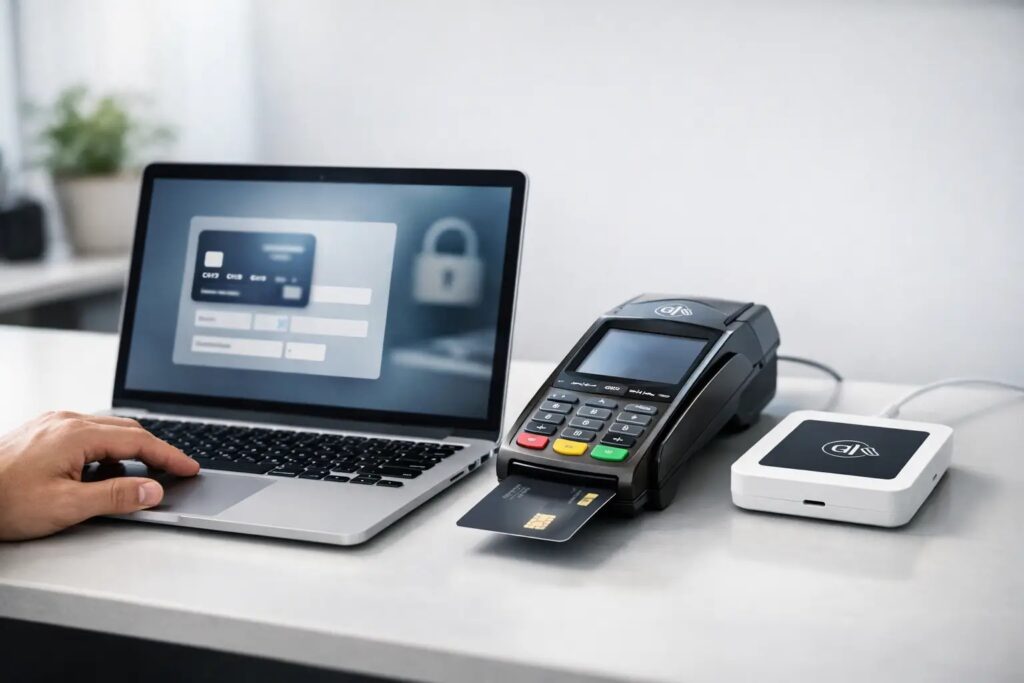
Understand how payment gateways and processors work together, how they impact conversion and settlement, and what businesses should evaluate when choosing payment infrastructure.
Payment Gateway vs Processor Explained
If your checkout stack is underperforming, the difference between a payment gateway vs processor is not just technical trivia. It affects approval rates, customer experience, fraud controls, settlement speed, and how easily your business can scale into new markets.
Many merchants use the terms interchangeably because both sit inside the same payment flow. That is understandable. But if you are comparing providers, planning a new integration, or trying to reduce payment friction, you need a clearer view of where one role ends and the other begins.
Payment gateway vs processor: the core difference
A payment gateway is the technology layer that captures and transmits payment data from the customer to the relevant payment networks and providers. It is the front-end bridge between your checkout, app, or POS environment and the broader payments infrastructure.
A payment processor is the service that routes the transaction through the financial system so the payment can be authorized, cleared, and settled. In simple terms, the gateway handles the secure handoff of payment information, while the processor handles the movement of the transaction through the banking ecosystem.
That distinction matters because merchants often buy both functions together from one provider, then assume they are the same product. They are not. They are separate parts of the same payment operation, and each can affect performance in different ways.
What a payment gateway actually does
When a customer enters card details, chooses a local payment method, or completes a digital wallet transaction, the gateway is responsible for getting that information from the checkout environment into the payment flow securely and correctly.
That usually includes encrypting sensitive data, tokenizing card information, connecting your site or app to payment services, and triggering fraud checks or authentication steps where required. The gateway also shapes the customer experience more than many teams expect. A slow or poorly optimized gateway can add friction at checkout, increase abandonment, or create unnecessary declines if it does not support the right payment methods or authentication logic.
For digital businesses, the gateway is often where flexibility starts to matter. If you want to support cards, bank transfers, wallets, alternative payment methods, recurring billing, or localized options in multiple countries, the gateway layer has to accommodate that complexity without creating an integration headache.
What a payment processor actually does
Once the payment data is passed into the system, the processor takes over the transaction routing. It sends the authorization request through the correct card network or payment rails, communicates with the issuing bank or relevant financial institution, and returns an approval or decline response.
After authorization, the processor also plays a role in clearing and settlement. That means turning an approved transaction into actual transferred funds, subject to the timing, banking relationships, and settlement structure involved.
From a merchant perspective, the processor has a direct impact on transaction reliability, settlement speed, and payment costs. If processing routes are weak, coverage is limited, or local acquiring is not available where you operate, you may see lower approval rates and higher friction even if your checkout looks fine on the surface.
How they work together in a real transaction
A customer clicks Pay. The gateway securely captures the payment details and sends the transaction request forward. The processor routes that request to the relevant network and issuer for approval. The result comes back through the chain, and the customer sees either a successful payment or a decline.
That is the simplified version, but real-world flows can include fraud screening, 3D Secure, currency conversion, tokenization, retries, local acquiring, and risk rules based on geography or transaction type. For merchants operating across borders, especially in regions with diverse payment preferences, those layers quickly become operational priorities rather than back-office details.
This is why businesses often benefit from working with a provider that combines gateway capabilities, processing support, and broader payment infrastructure in one setup. It reduces fragmentation and makes it easier to manage payment methods, settlements, reporting, and support without stitching together too many vendors.
Why the distinction matters when choosing a provider
If you are selecting a payment partner, knowing the difference helps you ask better questions.
Some providers are gateway-first. They offer strong checkout tools, broad integrations, and payment method orchestration, but rely heavily on third parties for processing. Others are processor-first, with solid acquiring and transaction routing but less flexibility in the customer-facing payment experience. Some offer both in a more unified model.
None of these approaches is automatically better. It depends on your business model, sales channels, markets, and internal resources.
If your main challenge is cart abandonment, checkout UX and local payment method support may be the priority. If your pain point is poor authorization performance in multiple countries, processing quality and acquiring reach may matter more. If you are managing both pay-ins and payouts across markets, operational simplicity can become the deciding factor.
Payment gateway vs processor for cross-border commerce
The gap between gateway and processor becomes even more important when you sell internationally.
A gateway may let you display relevant local payment methods and currencies to customers in different countries. That improves conversion. But if the processor behind the scenes lacks local banking connectivity, efficient transaction routing, or practical settlement options, you can still lose performance after the customer clicks pay.
The opposite can also happen. Strong processing capabilities alone do not guarantee a good checkout experience if the gateway does not support localized payments, mobile optimization, recurring logic, or in-app flows.
For merchants expanding into Latin American markets, this balance is especially relevant. Customer payment preferences can vary significantly by country, and local methods often play a major role in conversion. In that environment, businesses need more than basic card acceptance. They need payment infrastructure that can present the right options at checkout, process transactions reliably, and settle funds in a way that supports day-to-day operations.
What merchants should evaluate beyond definitions
The gateway-versus-processor question is useful, but definitions alone will not help you choose the right setup. The better approach is to evaluate the full commercial impact.
Start with payment method coverage. Can the provider support the methods your customers actually use in your target markets? Then look at integration. A single API can reduce implementation time and ongoing maintenance, especially if you operate across online, in-app, and in-store channels.
Next, assess approval performance and fraud controls. High acceptance rates and effective risk management are both essential, and there is often a trade-off. Tight fraud rules can block legitimate revenue. Loose controls can increase exposure. You want a provider that can help calibrate both, not force a one-size-fits-all model.
Settlement speed also deserves attention. Fast approvals mean less if funds arrive slowly or unpredictably. For finance teams, settlement clarity matters just as much as checkout performance.
Support is another practical factor that gets overlooked until something breaks. Payments are operational infrastructure. When issues affect transaction flow, you need a responsive team that can solve problems quickly, not a generic help queue.
When one provider handles both functions
Many modern payment partners package gateway and processing services together. That can simplify onboarding, reduce vendor management, and create a cleaner reporting and support structure.
For many merchants, that is the right move. It reduces the need to coordinate between separate technology and processing partners when troubleshooting declines, managing payment methods, or expanding into new countries.
Still, bundled does not always mean best-fit. You should confirm what is truly owned by the provider and what is outsourced. Ask who controls the gateway layer, who handles processing relationships, how settlements work, and where support responsibility sits. A unified commercial offer is valuable, but operational clarity matters more.
The better question to ask
Instead of asking only, “What is a payment gateway vs processor?” ask, “How will this payment setup help us convert more customers, reduce friction, and get paid faster?”
That shift keeps the conversation where it belongs – on business outcomes. The right payment structure should support growth, not add complexity. It should make it easier to launch in new markets, support more payment methods, manage risk, and keep cash flow moving.
For merchants evaluating payment infrastructure, the best partner is rarely the one with the longest feature list. It is the one that can align gateway performance, processing reliability, settlement options, and support around the way your business actually operates.
If your payments strategy is heading into new markets, new channels, or higher transaction volume, clarity on roles is useful. What matters more is choosing infrastructure that turns that clarity into measurable results.

