
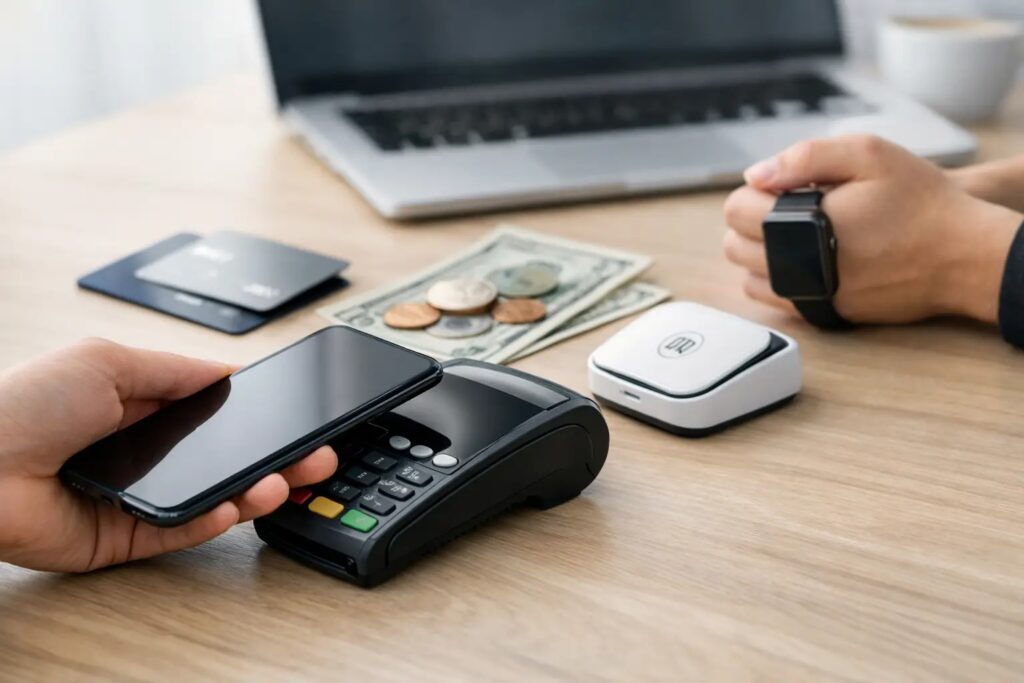
Learn how digital wallets, local payment methods, cards, and BNPL influence checkout conversion, customer trust, and global ecommerce performance.
Which Payment Methods Increase Conversions?
A shopper gets to checkout, sees only one card option, and leaves. That decision often gets labeled as cart abandonment, but the real issue is payment mismatch. If you want to know which payment methods increase conversions, start there: customers convert when they can pay the way they already trust.
For merchants, that sounds simple. In practice, it is a revenue decision that affects authorization rates, approval rates, fraud exposure, cross-border reach, and operational complexity. The right mix is rarely about adding every method available. It is about offering the methods that remove friction for your audience without creating unnecessary cost or checkout clutter.
Which payment methods increase conversions in real checkouts
The strongest conversion gains usually come from payment methods that match customer expectations in a given market, device, and purchase context. Credit and debit cards still matter because they remain a default choice for many online purchases. But cards alone are not enough, especially when you sell across borders or in regions where local methods are preferred over international card rails.
Digital wallets often increase conversion because they shorten checkout and reduce manual entry. On mobile, that matters even more. A customer who can confirm a purchase with a stored credential is much more likely to complete the order than someone asked to type card details, billing information, and verification codes on a small screen.
Bank transfers and account-to-account methods can also perform well, particularly for higher-value transactions or markets where consumers trust direct banking channels more than cards. Buy now, pay later can lift conversion for orders with higher average ticket sizes, but it can also introduce margin pressure and operational trade-offs depending on provider fees and customer quality.
Cash-based vouchers and local alternative methods remain important in parts of Latin America, where not every customer wants to pay with a card or has access to one. For merchants entering those markets, local relevance is not an optional feature. It is often the difference between having checkout traffic and having completed transactions.
The methods that usually perform best
Cards still convert – when acceptance is strong
Cards remain a core payment method because they are familiar, fast, and widely accepted. They tend to work best when the payment flow supports major brands, uses smart routing, and minimizes false declines. A weak card setup can hurt conversion even when customers want to pay by card.
That is why card acceptance should be evaluated beyond simple availability. If issuers decline too many legitimate transactions, or if authentication steps feel excessive, your checkout loses sales. Good card performance depends on authorization quality, fraud controls, and localized acquiring where relevant.
Digital wallets reduce friction fast
Wallets usually improve conversion because they remove effort. Fewer fields, fewer errors, and faster approval create a smoother path to payment. They are especially effective on mobile, where typing fatigue and abandoned forms are common.
They also help with customer trust. Recognizable wallet brands can reassure first-time buyers who may not yet trust the merchant enough to enter card details directly. That trust effect is often underestimated.
Local payment methods win in local markets
If you sell internationally, local methods can outperform global options by a wide margin. Consumers often prefer the payment type they use every day, whether that is a bank transfer, voucher, installment option, or regional wallet. When those methods are missing, conversion drops because the checkout feels foreign or inaccessible.
This matters in Latin America in particular, where payment behavior varies significantly by country. A merchant that relies only on international cards may reach some customers, but not the full addressable market. Local method coverage expands that market while improving payment completion.
Buy now, pay later can lift average order value
BNPL can increase conversion for products with more price sensitivity or larger baskets. Customers are more likely to complete a purchase when cost is spread over time. It can also raise average order value by making higher-priced items feel more manageable.
Still, BNPL is not a universal answer. Fees can be higher, some verticals see limited benefit, and approval logic varies by provider. It tends to work best when the product, margin profile, and customer base support installment behavior.
Bank transfers can strengthen trust and control
For some merchants, especially in B2B, subscription, education, travel, or high-ticket categories, bank transfers can convert well because they align with how buyers already pay. They may also reduce chargeback exposure compared with card-based methods.
The trade-off is speed and convenience. Traditional transfer flows can feel slower than cards or wallets unless the provider supports streamlined account-based payment experiences and clear payment confirmation.
What actually drives conversion beyond the payment logo
Payment methods do not increase conversions in isolation. They perform inside a checkout experience. Two merchants can offer the same methods and get very different results depending on how those methods are presented and processed.
The first factor is relevance. If your top methods are hidden, poorly labeled, or shown in an order that does not match customer preference, you create friction before payment even begins. The second factor is speed. Every extra field, redirect, or delay increases drop-off risk.
The third factor is trust. Security messaging, familiar payment brands, transparent pricing, and localized currency all support completion. The fourth is technical performance. Failed requests, slow load times, and poor mobile rendering can erase the gains of a strong payment mix.
How to choose which payment methods increase conversions for your business
Start with your customer mix, not with provider catalogs. The best method set depends on where your buyers are, what devices they use, how large the average transaction is, and whether they are buying impulsively or making considered purchases.
If most of your traffic is mobile, wallet adoption should be a priority. If your business is cross-border, local methods matter more than expanding card brands. If your average order value is high, installments or BNPL may be worth testing. If you serve businesses rather than consumers, bank-based options may be more important than one-click wallets.
Then look at your current checkout data. Where do customers abandon the flow? Which countries underperform despite strong traffic? Which payment methods have high decline rates? Conversion strategy gets stronger when it is tied to actual payment behavior rather than assumptions.
A focused rollout usually works better than a long list of options. Too many methods can clutter checkout and create decision fatigue. A better approach is to offer the smallest set that covers the largest share of customer preference in each market.
Common mistakes that lower payment conversion
One common mistake is treating all markets the same. A checkout that works in the US may underperform in Latin America or Europe because customer expectations differ. Another is relying only on cards and assuming that broad acceptance equals broad preference.
Merchants also lose conversions when they separate pay-ins, payouts, online payments, and in-store payments into disconnected systems. That creates operational friction, inconsistent reporting, and more failure points. A unified setup gives finance, operations, and product teams clearer control over the full payment journey.
Another issue is ignoring settlement and support. A payment stack may look strong on paper but create delays in reconciliation, market expansion, or issue resolution. Conversion does not end at checkout. If your payment infrastructure slows cash flow or creates support bottlenecks, growth becomes harder to sustain.
A practical framework for testing payment methods
The best way to improve conversion is to test method mix by market and channel. Start with a baseline: cards, one or two major wallets, and the most relevant local methods for your highest-opportunity regions. Measure checkout completion, authorization rates, approval rates, average order value, fraud outcomes, and refund or chargeback patterns.
From there, add methods with a clear business case. Do not add a payment option just because it is trending. Add it because it solves a proven checkout barrier, expands reach in a target market, or improves economics for a specific customer segment.
This is where a provider with broad coverage and centralized management can make a commercial difference. When onboarding, settlement, reporting, and payment method access sit in one platform, merchants can test faster and scale with less operational drag.
The question is not whether more payment methods increase conversions. The better question is whether the right payment methods are available at the exact moment your customer is ready to buy. Get that right, and checkout stops being a leak in the funnel and starts acting like a growth engine.

