
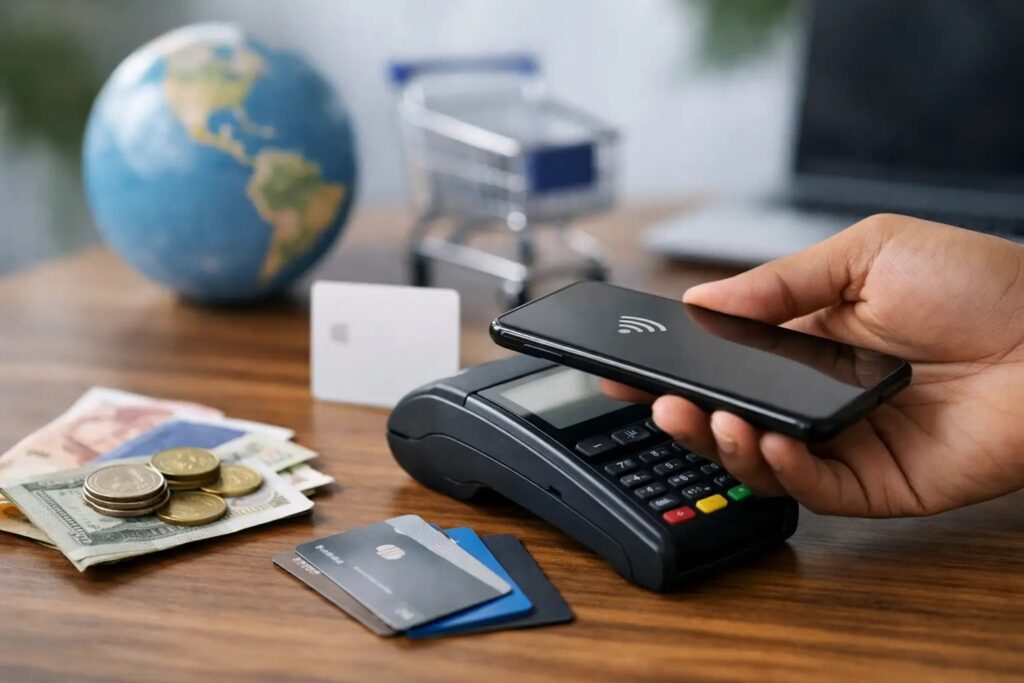
A practical guide to the most important payment methods in Latin America, including cards, installments, bank transfers, wallets, and local payment options that improve checkout performance.
Top Payment Methods LATAM Merchants Need
A checkout that works in the US or Europe can fail fast in Latin America. Customers may not use international cards, may prefer installment payments, or may expect cash-based vouchers and bank transfers. For merchants expanding into the region, understanding the top payment methods LATAM customers actually trust is not a nice-to-have. It directly affects conversion, approval rates, and how quickly revenue turns into settled funds.
This is one of those markets where broad coverage matters, but precision matters more. Adding every available option is rarely the right move. The better approach is to align payment methods with country behavior, product price point, and how your customers prefer to pay.
Why top payment methods LATAM strategy is different
Latin America is not a single payments market. Brazil behaves differently from Mexico. Mexico differs from Colombia, Chile, and Peru. Even where cards are common, local debit rails, cash vouchers, real-time transfers, and installment expectations shape conversion in ways many international merchants underestimate.
The practical challenge is straightforward. If your payment stack only supports global card brands, you will likely leave demand on the table. If your checkout is overloaded with too many local methods, you may create confusion and operational complexity. The right strategy sits in the middle: enough local relevance to remove friction, with enough operational control to keep reconciliation, settlement, and fraud management manageable.
The top payment methods LATAM businesses should prioritize
Cards still matter, but local card acceptance matters more
Credit and debit cards remain a core part of online commerce across the region. But card strategy in Latin America is not just about accepting Visa and Mastercard. It is about local acquiring, domestic card support, issuer behavior, and better approval routing.
Many merchants enter the region assuming card acceptance is universal. It is not. Cross-border card processing can lead to lower authorization rates, more fraud flags, and customer distrust if the transaction appears foreign. A localized card setup typically performs better because it aligns with domestic issuer expectations and can reduce unnecessary declines.
Cards also matter because they support recurring billing, subscriptions, and higher-value purchases. But if your average order value is meaningful, card acceptance alone may still be too narrow.
Installments are often a conversion tool, not a feature
In several Latin American markets, paying in installments is part of normal buying behavior. For merchants selling electronics, travel, education, healthcare, fashion, or any mid-to-high ticket item, this can materially change checkout performance.
Customers are not always comparing your product against a competitor. They are comparing whether the purchase fits their monthly cash flow. Offering installments can increase basket size and reduce hesitation at checkout, especially in markets where revolving credit access is limited or tightly managed.
There is a trade-off. Installments can add complexity to settlement, customer communication, refund handling, and risk controls. But for the right merchant profile, they are not optional. They are part of being commercially relevant.
Bank transfers and real-time rails are growing fast
Account-to-account payments have become more important across the region, particularly where consumers trust bank-led payment flows or want to avoid card issues. Real-time payment systems are especially attractive because they can combine speed, lower cost, and strong customer familiarity.
For merchants, these methods can improve acceptance among users who do not want to enter card details or who face card limits and issuer declines. They can also support faster confirmation and potentially simpler cost structures, depending on the country and provider setup.
That said, bank transfer flows are not interchangeable across markets. Some are instant and consumer-friendly. Others involve more steps and more room for drop-off. The method only helps conversion if the checkout experience is clear and the payment confirmation process is reliable.
Cash-based vouchers still serve a real segment
It is easy to dismiss cash vouchers as outdated. That would be a mistake. In several markets, voucher-based payments remain relevant for consumers who are underbanked, prefer cash budgeting, or do not trust card entry online.
These methods can open access to customers that card-only merchants miss entirely. They are particularly useful for certain retail, gaming, travel, and digital goods models where broad consumer reach matters more than instant payment confirmation.
The compromise is obvious. Voucher flows are usually slower, can create abandonment between checkout and payment completion, and may add operational lag. They are not ideal for every business. But if market access is the goal, they still deserve a place in the mix.
Digital wallets can lift mobile conversion
Wallet usage varies across Latin America, but the underlying pattern is clear: mobile-first customers respond well to payment experiences that reduce form filling and speed up checkout. When wallets are widely recognized in a specific market, they can improve convenience and trust.
For merchants with strong mobile traffic, app-based purchases, or repeat buyers, wallets can be a smart complement to cards and bank methods. They are especially effective when checkout speed matters, such as in food delivery, transportation, digital services, and impulse-led commerce.
Still, wallets are not a replacement for local market coverage. In many LATAM countries, they are part of the mix rather than the dominant method.
How to choose the right mix by business model
A practical payment strategy starts with what you sell and how your customers buy. If you run subscription billing, card depth and recurring payment support come first. If you sell higher-ticket items, installments may do more for revenue than adding another wallet. If your customer base includes underbanked users, cash vouchers or local bank transfer methods may be the difference between entering a market and failing in it.
Cross-border merchants should also separate customer preference from internal convenience. Finance and operations teams often want one clean setup across every market. That is understandable, but Latin America tends to reward localization. The strongest setup is usually not the simplest one at the front end. It is the one that gives customers familiar ways to pay while keeping settlement and reconciliation centralized behind the scenes.
This is where infrastructure quality matters. A single integration that supports local methods, domestic and international pay-ins, and predictable settlement can remove a lot of operational drag. That is much more valuable than adding payment methods one by one through separate contracts and disconnected reporting.
What merchants often get wrong
The most common mistake is assuming card acceptance equals market readiness. It does not. Another is launching with too many methods and no prioritization. More buttons on a checkout page do not automatically mean more conversions. Customers need the right options, presented clearly, in the right order.
There is also a recurring settlement mistake. Some merchants focus heavily on front-end payment choice and pay too little attention to payout flows, local currency settlement, refund processes, and support responsiveness. Those issues show up later, but when they do, they affect both margin and customer experience.
Fraud controls deserve similar balance. Overly aggressive risk settings can suppress good transactions, especially in markets where issuer behavior and consumer patterns differ from North America or Europe. Strong fraud prevention matters, but so does optimizing for approval rates. The best payment setup does both.
A practical framework for evaluating payment providers
When reviewing providers for LATAM expansion, look past the payment method checklist. Ask whether the provider supports local processing where it matters, whether settlements are fast and transparent, and whether your team can manage multiple countries without stitching together separate systems.
You should also evaluate onboarding speed, API flexibility, dispute handling, payout support, and account management quality. These are not secondary details. They determine how quickly your team can launch and how efficiently you can scale. A provider like Key2Pay can be valuable here because the commercial advantage is not just coverage. It is reducing fragmentation while keeping local payment relevance.
The strongest payment setup in Latin America is usually not the flashiest. It is the one that gives customers familiar ways to pay, gives merchants dependable approval rates, and gives finance teams clear control over settlement and reporting.
As you expand, treat payment methods as a growth lever, not a technical afterthought. The right local mix can lower friction immediately, but the bigger win is longer-term: more completed checkouts, stronger retention, and fewer operational compromises as volume grows. That is what good payment strategy should do.

